

Nobody will be surprised to read that journalism leans toward sensationalism in terms of topics chosen for coverage, how topics are covered, and (especially) the headlines chosen to represent that coverage, seeing as the headline is what makes people click through to (maybe) read the story.
Category: External World
Outside of philosophical headspace, things happening in the “real” world.

To be fair, I haven’t seen much concern expressed on the theme of this tweet,
Has anyone considered that Facebook's “How Hard Did Aging Hit You” Challenge is just a way to refine facial recognition technology? What better way to get people to offer up a ton of comparative visual data?
— Greg Britton (@gmbritton) January 13, 2019
but with over 5 000 retweets (at time of writing), it certainly seems like some people are convinced, and possibly concerned. I’m however not inclined to think that the “10 year challenge” is a sinister ploy by Facebook to harvest this freely-volunteered data, in order to improve its facial recognition technology.

Over the past week, I’ve been receiving emails from yahoo.jp email addresses offering me the choice between paying money into a Bitcoin address, or having my (alleged!) dirty secrets exposed to colleagues, friends and family.
One guy asked for $4000, another $5000. The highest figure quoted has been $6000, and one fellow asked for a Bitcoin, so who knows how much value he was expecting this hour, given that the coin could be worth just about anything next time you check.
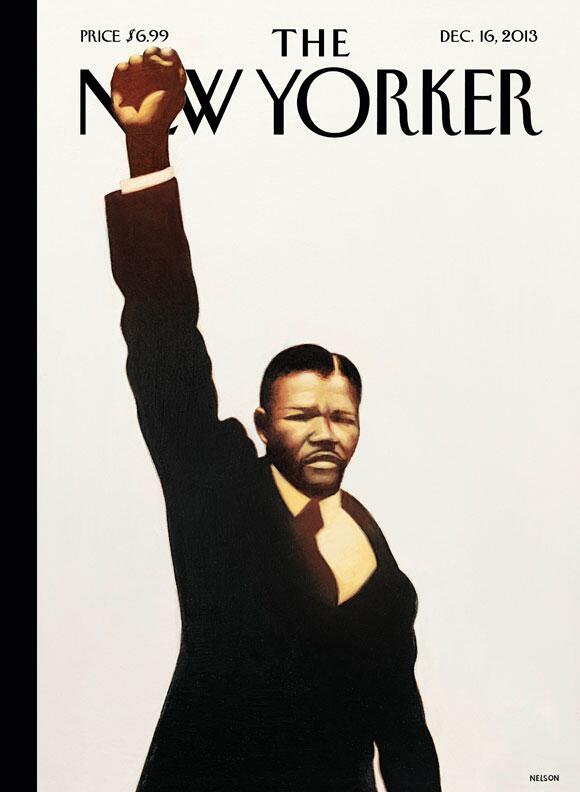

My friend Jonathan Faull has already written a piece that captures the significance of Mr. Mandela’s death for most of us South Africans, and for many elsewhere in the world, better than I’d be able to. As 6000 remarked, British audiences could perhaps contextualise this as “the equivalent of a hundred – a thousand – Dianas”. Commiserations to all who are feeling somewhat bereft, today and in the coming weeks.
My contribution is simply to briefly state that if you’re concerned about honouring Mandela’s memory, or making his life mean something beyond the significance already captured in history, then remember that the symbolic force he generated was all about understanding why we are in disagreement, and trying to find a way out of that disagreement. It was about reconciliation, and hope, and progress. He offered a genuine source of energy for moral courage, and for effecting change.
Regardless of the details of history, and whether you think certain factual details should be emphasised or de-emphasised, that’s the effect of Mandela the icon rather than Mandela the man. So when idiots like those at the Westboro Baptist Church (WBC) say that they will be coming to picket his funeral (Mandela supported gay marriage, thus will be in hell, thus WBC are happy), the last thing you should do in honouring Mandela is to threaten them with violence.
Some hyperventilating types from the tabloids and Twitter (often indistinguishable, I guess) are worried about the fate of SA now that Mandela is dead. But that’s bollocks – we’re in as good or bad shape as we were yesterday. We’ve been saying goodbye to Mandela for months if not years already, and besides, the South Africa he presided over is not the same one we have today.
Our success, or our failure, rests more in whether democrats (and generally, ethical voices) inside today’s ANC can rescue it from the likes of Jacob Zuma. Jacob Zuma is not my president. I’ve not had one since Mandela, but hopefully I’ll have one again, sometime soon. And if you want Mandela’s death to mean something, then consider using it as a motivation to think about what his life meant, and the legacy he left us, and then to buckle down and renew your efforts towards helping us achieve his vision.

 So, a couple of months ago, I decided to become a prepaid cellphone customer, after having been a contract customer of MTN’s pretty much since cellphones become a thing in South Africa. At least two friends will vouch for the fact that I said, when plotting my escape from the contract, that MTN would find a way to get an extra month’s subscription out of me. And lo, it has now come to pass.
MTN – I was unsure if I wanted to port or not, and was going to wait to see who had the next phone I wanted before deciding on that. It’s probably fair to say that you’ve made the decision a little easier.
Let’s start with this screencap from their website:

So, given that my contract expired on September 8, my email of August 8 requested cancellation, as well as migration to prepaid. As requested, by their website. I know that they got this email, because they replied to it, today, 32 days later, after I had yelled at someone on the phone.
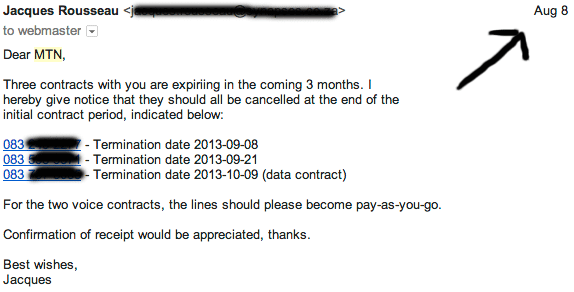
You’d think the email would be enough. But given the cynicism expressed by the prophesy I had made, I also went into an MTN shop that day (August 8, 31 days before expiry). In front of me, I have the fax, sent by the staff there to head office, requesting a move to prepaid. The store clerk said neither the fax, nor my email, were necessary – because things don’t work that way. He said I should just call 808 (customer service) when my contract expired.
I said, that makes no sense. Because when my contract expires, it will roll over to month-to-month on the same terms. So, if I were to call on September 9 (the first day of being out-of-contract), I’d already be committed to another billing cycle. He said, no, you’ll be fine. I said, no, your website says 30 days, and that makes more sense. So please send the faxes.
And then Saturday came, the day before my contract was to expire. So, just to make sure of everything, I called 808. They said they can do nothing for me, and that I should call back on Monday. I said, okay, but that’s a new billing cycle – given that I have emailed a month’s notice, and faxed the same, I take it I won’t be charged for a whole new month? They said, you’ll be fine.
Today, I call at 8am, and request that the cancellation and migration to prepaid take effect. Have you used the airtime and data, I’m asked? Well, I shouldn’t have any – my contract terminates yesterday, and in fact, I shouldn’t be able to call you right now, I guess, seeing as I’m out of contract. “Oh no, sir – you’re now on a new billing cycle, ending October 8. If we convert you to prepaid now, you’ll lose your minutes and data”.
As predicted. And instead of going through this again on October 8, I said cancel, immediately. I know I’ll lose the minutes and the data, and that you have extorted R450-ish from me, thanks to not following the procedures you ask me, your customer, to follow on your website. So, anyone else wanting to leave MTN, be advised that they sometimes seem to keep you hostage when you do. Well played, you got your ransom.

 My fellow columnist at the Daily Maverick, Ivo Vegter, has secured the rights to screen FrackNation in South Africa. If you’ve seen Gasland, you might think that the South African government would be giving Shell permission to destroy the Karoo, create flammable tap water, and murder a number of meerkats. If you’ve read any of Ivo’s columns, you’d know that he thinks these fears unfounded, and that fracking in the Karoo is instead likely to result in lots of cheap energy, jobs and so forth.
But regardless of which side of the fence you are on the issue of fracking, it’s important to be persuaded by evidence rather than by hysteria, unfounded fear, or emotional blackmail. And this is the problem with Gasland, in that Josh Fox simply makes stuff up (at times) in that highly successful documentary. Regardless of whether he’s right or wrong on the merits of fracking, he does his cause no good through playing fast and loose with evidence.
Well, one might hope that causes premised on hysteria and dishonesty pay a price. In this case, that hasn’t happened – in fact, Fox has been commissioned to make a sequel. Fox’s documentary did however prompt a thorough response – also in documentary form – by independent journalist Phelim McAleer. I’ve seen it, and it’s worth watching – not only because he counters many of the claims made by Fox, but also because he exposes how afraid Fox is of engaging with any critical questions.
So if you care about the issue of hydraulic fracturing – and also, care about your views on important matters being justified by all the (reasonably) available evidence, then try to attend next wek’s Cape Town premiere of FrackNation.
To quote from the press release:
The premiere will be screened at in Cape Town on 20 June 2013. Afterwards, there will be opportunity for a Q&A with me (Ivo Vegter, columnist for Daily Maverick and author of Extreme Environment).
Venue: The Labia
City: Cape Town
Date: Thursday 20 June 2013
Time: 18:00 – 20:00Tickets are R200. You can book here:
A full house would be great, because it is important to combat lobby group propaganda, and I’d like to cover my own expenses. Please forward this to other people you think would be keen to hear an
independent take on the shale gas debate.

 This is too funny to not share. Earlier today, one of our local journalists called me to ask if I could come into the studio and offer some comment on a draft policy for the allocation of fishing rights in the oyster industry, because he’d had sight of the policy (pdf), and it contained this hilarious bit in the section detailing the policy’s objectives:
(c) Co-manage oyster fishery with other spheres of government and the fishing industry in a manner that recognizes government priorities, strategic objectives of the spheres of government, the interests of fishing industry and most importantly in a manner that would please, praise and glorify that one who provided and gave man the power to rule over the fish (including oysters)
All the fish, including oysters? You mean molluscs are fish too? Those scale and fin-less ocean-dwellers that Leviticus 11:10-12 tells us are an abomination? South African molluscs will no doubt be relieved to hear that they’ve been upgraded – perhaps oysters from your part of the world will be equally blessed in the near future. And instead of managing the industry to do things like make a profit, feed people, or keep the “fish” population sustainable, it’s all about pleasuring Jesus?
There is of course a serious side to this, as I commented for the television insert (I’ll hopefully post that later) – each little bit of religious intrusion into the laws of a secular country is by itself of little consequence (usually). But taken together, they indicate a lack of commitment to keeping our laws secular. And, if nonsense like this can seem reasonable to someone drafting a policy – and if it somehow slips past the eyes of others who examine that policy – we can accidentally find ourselves in a situation in which the law stops being secular, and where we’ve got to waste much time and energy cleaning this sort of idiocy out of it.
6000 also has something to say (as he so often does).

 There is never any reason to expect a new year to be any different from the previous one. The arbitrary shift from December to January is good for a few days off, and for many of us, too much indulgence – but changing minds and attitudes takes longer than that, and isn’t responsive to fireworks and Auld Lang Syne in any case.
So, it’s no surprise to find that – after a mere 5 days of 2013 – we already have (at least) 2 depressing examples of the hamster wheel that is discourse around race in South Africa. Much effort is put into keeping it spinning, but to little effect. And if one hamster dies, another – often indistinguishable from the last – takes its place.
COSAS is hamster number 1. This Black Consciousness movement was formed in the late 70’s to represent black pupils, following the Soweto uprisings. They have many proud moments in their history, regardless of whether you agree with their politics or not. You can read about their history here if you care to. The salient detail for my purposes is that the “organization’s principle aims were the conscientising of students and the wider community to the repressive nature of education in South Africa” (sic).
If you think the construction of that sentence poor, consider this, the first sentence of the recent COSAS statement on the 2012 Matric (Grade 12, the final year of secondary school) results:
The congress of South African students would like to unreservedly welcome the metric result of the class of 2012, this class is the class that reactionary forces anticipated negative outcomes from, as a way to put substance onto their argument which suggest that there is a severe collapse of order in the government that is lead by the ANC, the 2012 result beyond any other thing they are specially recognized by COSAS because they Are a reflection of a narrowing gap in terms of the quality of education between the model c schools and the township and the rural school, and such was made more than visible by the performance of a number of students who scored outstanding result from the lowest quintiles of our schools.
As a friend pointed out, this is a telling example, and “a massive indictment, of what mass education has done for born-free South Africans”. Not to mention proof-positive that COSAS’s work (as quoted above) is not yet done, in that the organisation’s Secretary General is still a clear victim of that repressive education himself.
The statement carries on in that vein (here’s the pdf), and in some respects gets worse when Tshiamo Tsotetsi (the Secretary General) expresses concern that publishing student names and results in newspapers is ill-advised because pupils are then targets for witchcraft: “All of these bad things can come to an end only if these results are no longer published. We would no longer loose our young people through depression or witchcraft.”
One of the leaders of an organisation devoted to improving school education, in other words, believes that children are being lost through witchcraft (and therefore, that witchcraft even exists). And of course, he’s right to some extent, seeing as pupils no doubt believe this too and are therefore victims of something people call “witchcraft”, despite their being nothing supernatural about it at all. But the tragedy is that 12 years of school isn’t sufficient to dispel these superstitions. Or, that nothing in the curriculum teaches skills and principles of reasoning that would help to do so. Worst of all, it’s probable that many teachers believe in witchcraft themselves.
The education system, the Matric results, and the gloating of the Ministry of Basic Education – even in the face of a reality where less than 1 in 3 pupils complete high school – could be the subject of an extended rant. As could hamster number 2, Gillian Schutte, with her recent prescriptive self-flagellation entitled “Dear White People“. I’ll get to that in a separate post, and for now simply reiterate what I said on first reading her column (with apologies for misspelling Schutte’s last name):
Last week JZ told black people what to think, this week Shutte tells white people what to think. Nobody should dare think for themselves.
— Jacques Rousseau (@JacquesR) January 2, 2013

As submitted to Daily Maverick
 Last week’s shootings in Aurora, Colorado brought to mind the power of absurdity. Amid all the speculation regarding what motivated James Holmes to open fire on a crowd of moviegoers – killing 12 and injuring dozens – we can safely assume that there at least was a motivation or a reason. But it might not be something we can relate to, and in at least one sense, it will be absurd.
Much of the speculation as to Holmes’s potential motive is of course also absurd: from pastor Rick Warren’s claim (edit: he claims misinterpretation) that the teaching of evolution is somehow to blame, to the equally idiotic assertion that the killings are the result of the teachings of Christianity. Most if not all armchair psychologising about cases like this is little more than an opportunity for people on the sidelines to air their fears or prejudices.
Without speculating on his motives, then, we can still say that some set of deliberations led him to plan and execute this attack. And the narrative underpinning those deliberations would have been absurd, because whatever he thought the act would demonstrate, or whomever he thought it would punish, it would inevitably fall short of succeeding in its goals.
To wit: If he intended to kill people of a certain demographic or class, the quality of his targeting was clearly absurd, in that the victims were essentially chosen at random. If he meant to send a message, we’ve not yet been given to clue as to what it is, nor are we inclined to being persuaded by messages delivered in such a fashion.
The only long-term effect on the world from actions such as these is to inconvenience future cinemagoers, who will most likely soon have to pass through security checkpoints to get into the theatre. Minds won’t be changed, whether that of a lover or a god you intended to impress, or those of a set of politicians or bankers you wanted to chastise. In all these cases, the act and the motivation for it will be absurd.
And of course, a heavy price is paid for such a vanishingly small or nonexistent reward. This is the power of absurdity – we define the groups or ideologies we belong to abstractly, to the extent that our political or religious identities become unfalsifiable or irrefutable. Sometimes, we kill, fight and die for ideas, even those that we think will only manifest in an afterlife.
More broadly, communal commitment to the same set of beliefs, whether absurd or not, deepens trust and galvanises group solidarity. We demonstrate our commitment in our actions; and the more elaborate and apparently heartfelt those actions are the more convincing and persuasive they appear to an audience. This can in turn grow the audience or the community, in that they are attracted to the sincerity and solidarity they observe.
When the Pope washes the feet of worshippers, for example, the gesture is costly because it sacrifices power and ego. It’s intended to be a hard-to-fake symbol of commitment to higher powers, or to a shared set of beliefs – this is part of what makes those commitments or beliefs more likely to be adopted by an audience.
Holmes’s gesture was more costly. Clearly so in the case of those who were injured or lost their lives, as well as their families and friends, but also for Holmes himself, who faces certain loss of freedom in one form or another and even potential loss of life (capital punishment is legal in Colorado, even though the last death sentence was handed down in 1987, and then finally executed in 1997). It’s tempting, therefore, to speculate as to some grand motive, because the motive needs to be grand enough to allow us to reconcile these costs.
But perhaps the speculation is always more for our own comfort than anything else, given that you can’t explain the absurd. That is partly the point of these gestures and narratives – they are designed to be un-interpretable and outlandish, because that’s how they perform the task of separating “us” from “them”. We distinguish between cultures not only on the grounds of things like language, but also through ritual, and if the rituals are too easy to fake they become less useful tools for doing so.
To some extent, we now have what one might call universal religions or cultures – things like democracy, human rights and so forth – and various commitment devices that indicate our membership of these religions or cultures. As with all religions, costly gestures indicate greater commitment. If it is inconvenient for you to cast your vote, yet you still do so, you’ll appear to care more for democracy than someone who can’t be bothered to vote. If you spend 27 years in prison, you’ll appear to care even more.
We can’t yet know what religion, culture, or identity Holmes was demonstrating commitment to, and perhaps we never will. Perhaps he was doing nothing of the sort, and we’ll later discover that this (ex) PhD student in neuroscience should himself be a case-study of a certain sort of brain abnormality which predicts this behaviour better than any speculations as to his hypothetical beliefs could do.
Or, more worryingly for those who’d like to take comfort in a narrative – any narrative – that might bring something resembling sense to this tragedy, events like this could simply be a reminder that those universal religions many of us take for granted aren’t yet as firmly rooted in modern cultures as we’d like to believe, and that there’s still plenty of work to be done.

 Since the visit of that Irish preacherman to our shores for the U2 360° Tour, a few notable musicians have been to Cape Town, but last night’s Tori Amos gig was the first to lure the Doctor and me back into the crowd. And worthwhile it was. Ms Amos puts on a fine show – full of energy and passion – and if you like her tunes too, there would be little to complain about regarding this stop on her ‘Night of Hunters’ tour. A few brief notes on the evening:
Facilities: The bars only served bad beer, sweet white wine (ie. also bad) and bad red wine. The latter was also in short supply, and the two bars we queued at ran out just as we reached the head of the queue. Alternately, we were the victim of some prejudice or other, given this suspicious timing. Seeing as there were plenty of empty seats in the arena, this does not bode well for how they would cope with a sold-out event. (Perhaps some of you who went to the Kylie Minogue show can comment?).
Opening act: Yoav, Israeli born but bred in Cape Town. This man and his guitar combine to create some lovely sounds – he does electronica-style beats with his hands on the guitar, which combine with a strong and evocative voice to create some quite compelling tunes. Check his interesting biography here, and if you get a chance to hear him live, it should be worth your while.
Tori: She is utterly nuts – she’s got the Earth Mother thing going, combined with a manic intensity that sometimes led you to think she was about to swallow a microphone or pound a keyboard to bits. But also bloody good at what she does. In terms of performers looking and acting like they give a damn about putting on a good show, she’s up there with the best I’ve seen. Because this was an unplugged-style concert (just her and two pianos), many of the tracks had different arrangements to the ones you’d have heard on the albums, and I’d say that all of them worked very well (with the possible exception of “Concertina”, which I thought lacked the driving rhythm of the recorded version). The best of the night for me was either “Hey Jupiter” or her cover of Depeche Mode’s “Personal Jesus” (a quite regular cover, along with The Cure’s Lovesong, which we unfortunately didn’t get to hear this time). “Me and a Gun” worked well live, thanks to both the intensity of the lyrics and that voice of hers – the arena was utterly silent for this, and I’d imagine it would have been the highlight of the evening for some.
The only general regret I have – and it’s not a complaint, as the show was memorable and very worthwhile – was that for an artist who has such a large catalogue, it’s unfortunate that 7 of the 17 tracks were off “Little Earthquakes”. In the 20 years since that (debut) album was released, there have been 11 others, so we only got to hear a small selection of her music. This might of course have been to the taste of many present, who at least knew the words and could therefore sing along. And this was a problem. As I said above, many of the songs had new arrangements, so the enthusiastic backup singers in the crowd around us had little choice but to fumble along as best they could, matching the tempo of what they were hearing to what they remembered in real-time. And this no doubt sounded better in their heads than it did in ours. Or at least, I’d think so – because if it did sound as bad to them as to us, I imagine that they would have stopped trying.
The sound was great, unlike at the U2 concert. My only technical complaint is regarding the lighting. We were in the 5th row, below the stage, and would quite regularly be temporarily blinded by one or more lights pointed straight at us at eye-level. But this is a minor quibble, and one could always watch one of the two big screens instead of the stage when this happened.
And finally, a special mention to the Queen of the Nile, who gave me a 900% return on investment after I apparently pushed her buttons in the right sequence. Thanks and praise be to the law of averages, along with confirmation bias.